How the Invisible Labor Expected of
Women Impacts Modern Organizations
Research by Colleen Ammerman and Deepa Purushothaman
The Care Tax.
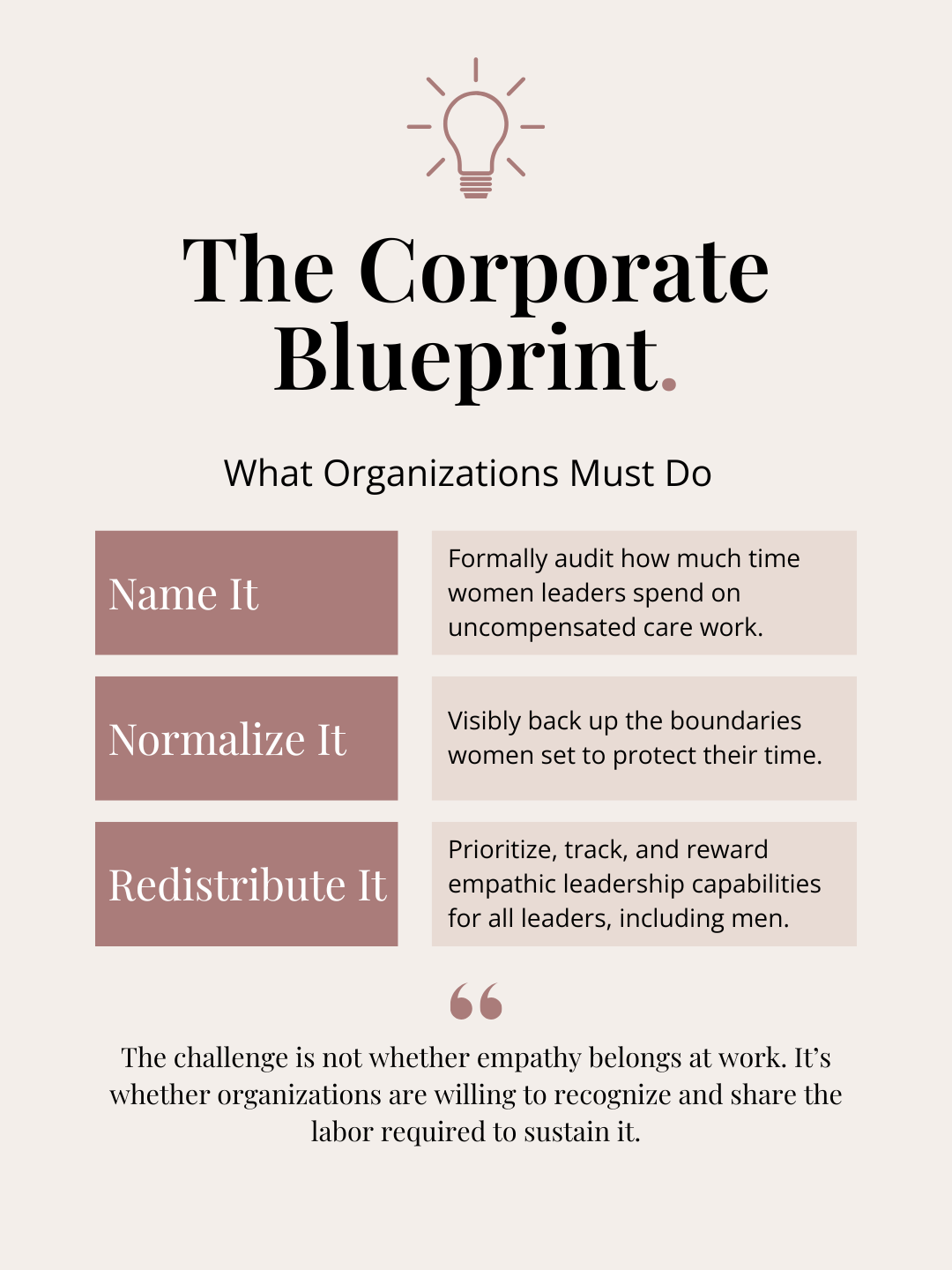
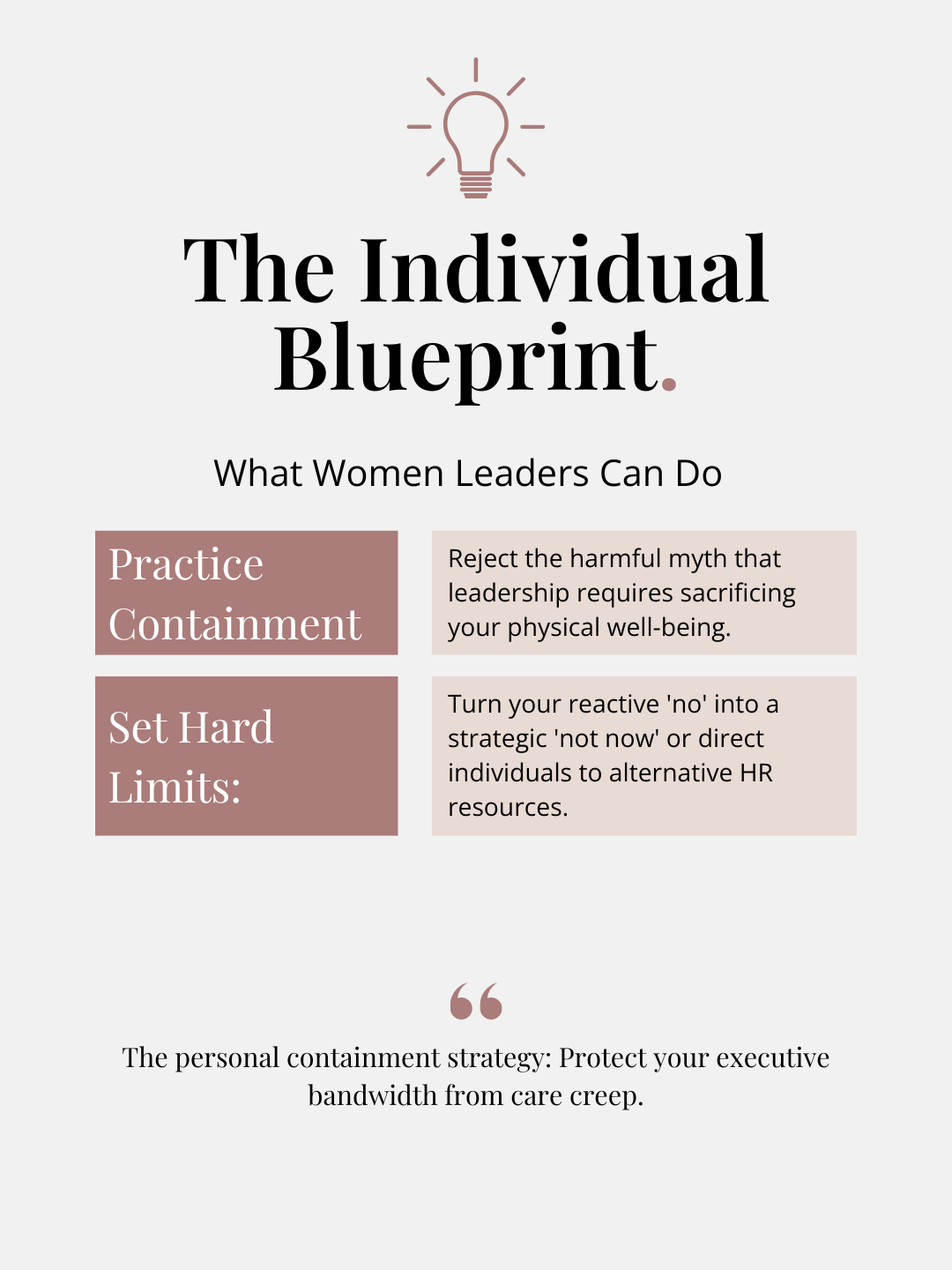
Share these insights on social media.
Download the official Care Tax infographic to spread the word on your preferred social platform.
How the Research Began.
Naming something can change everything.
The Care Tax began when Deepa Purushothaman read a New York Times interview in which Brené Brown described how audiences often expected her to stay, listen, and absorb their painful stories in ways Adam Grant said he did not experience. Deepa recognized the gendered pattern immediately.
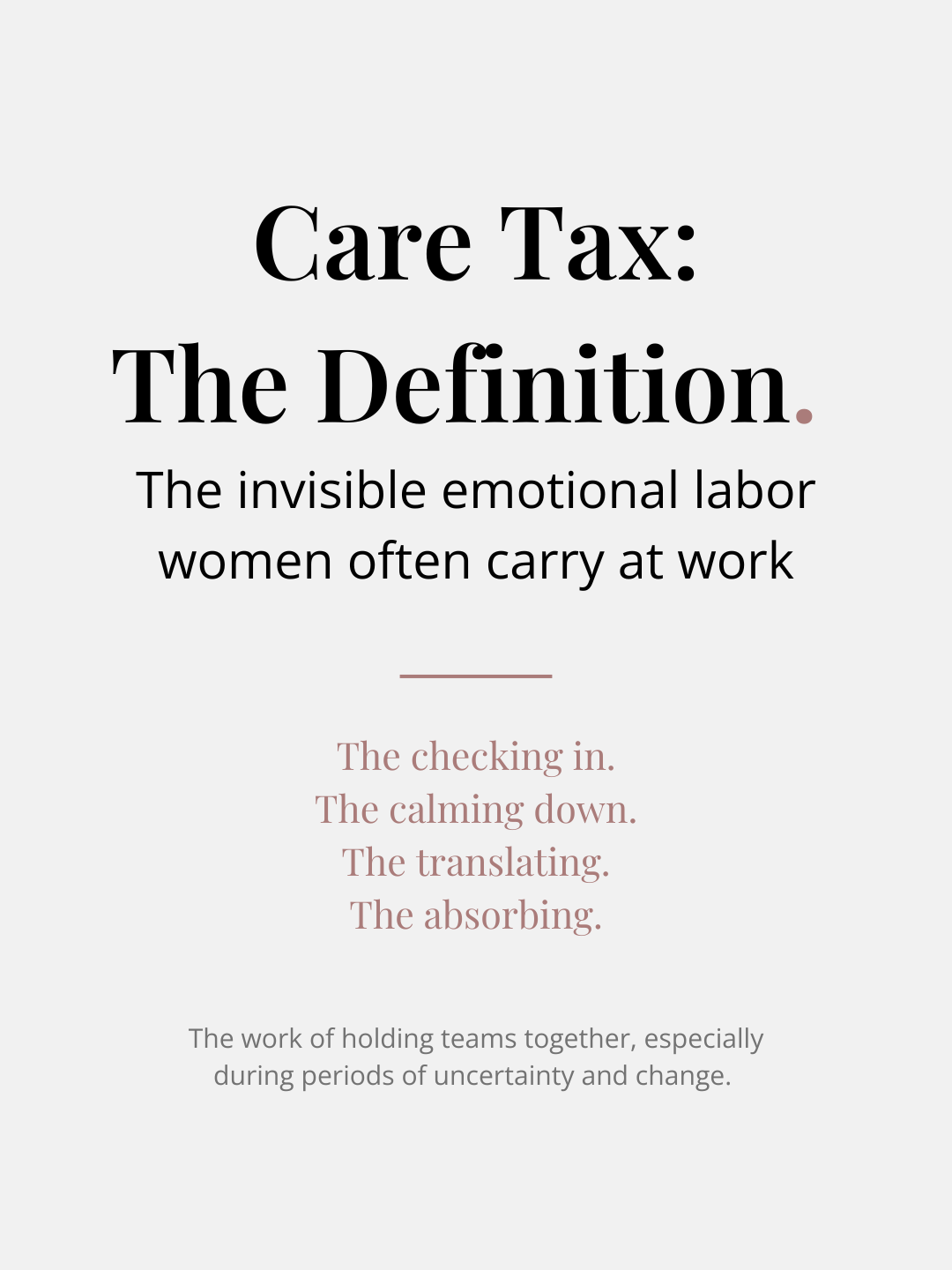
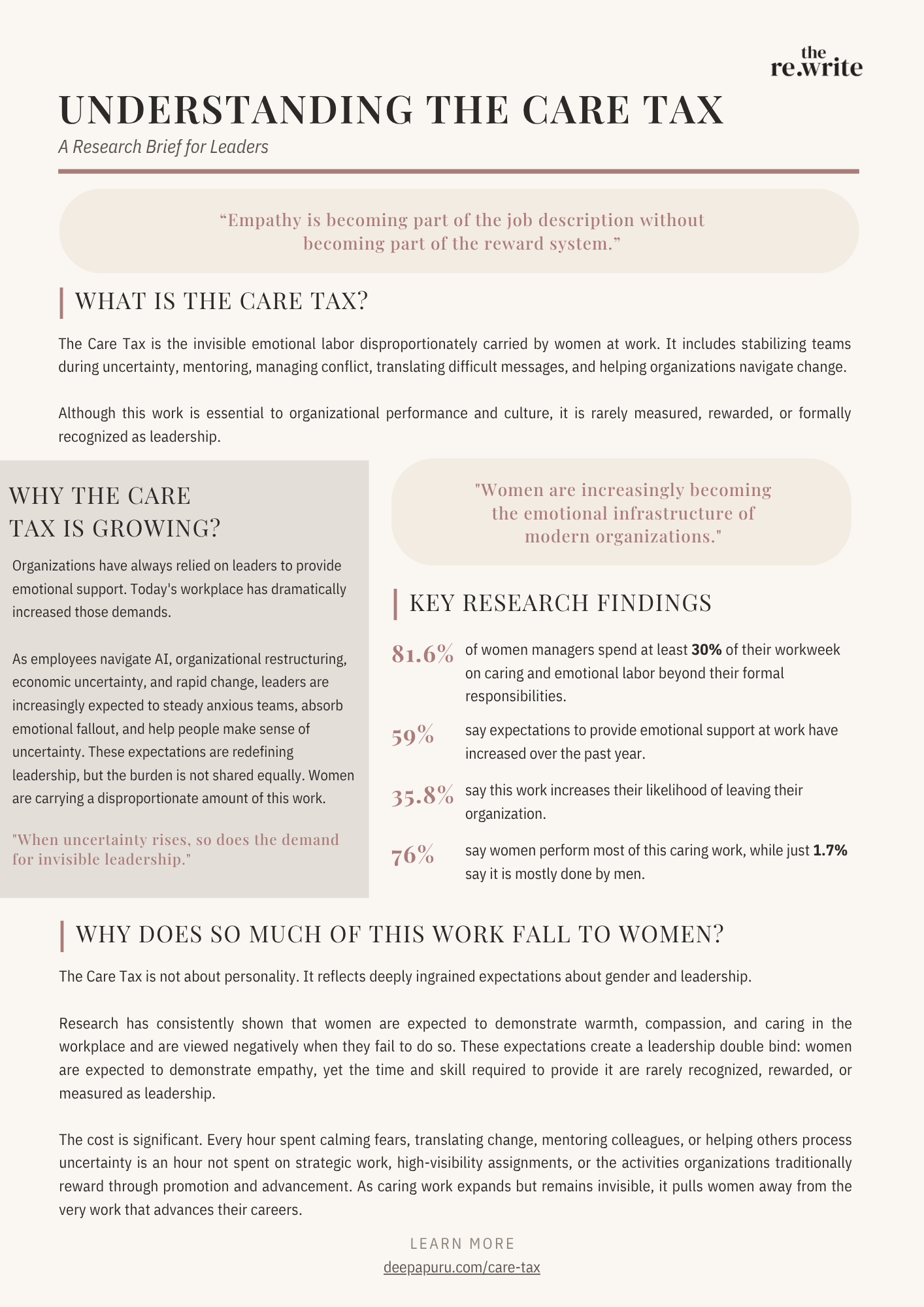
She named it the Care Tax: the hidden cost women pay when they are expected to absorb anxiety, provide emotional support, and steady teams. It is the caring labor that keeps organizations functioning.
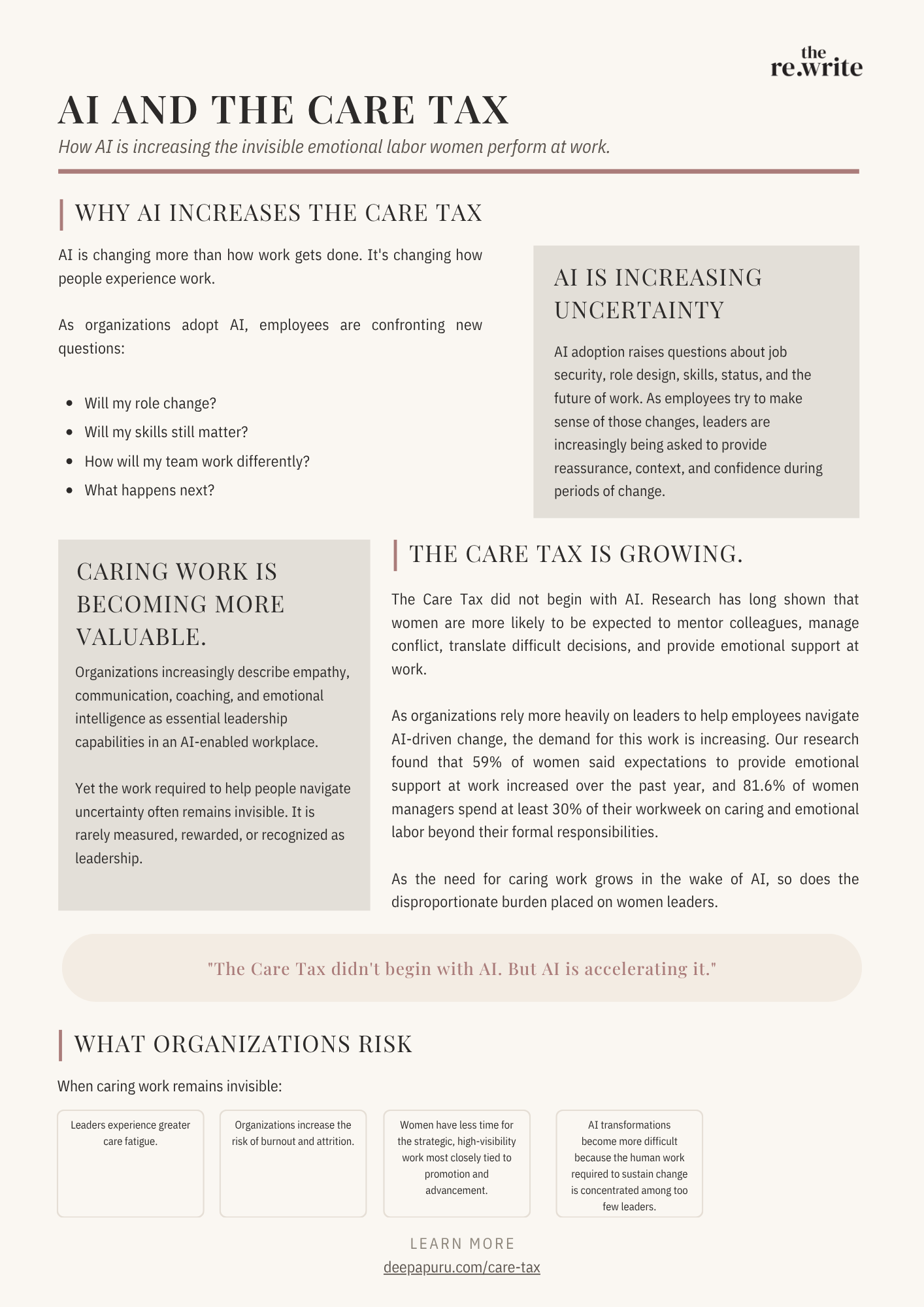
When Deepa shared the idea on LinkedIn, the phrase went viral with more than half a million views. Women began naming similar experiences of carrying stress, navigating uncertainty, and holding fear as AI grows.
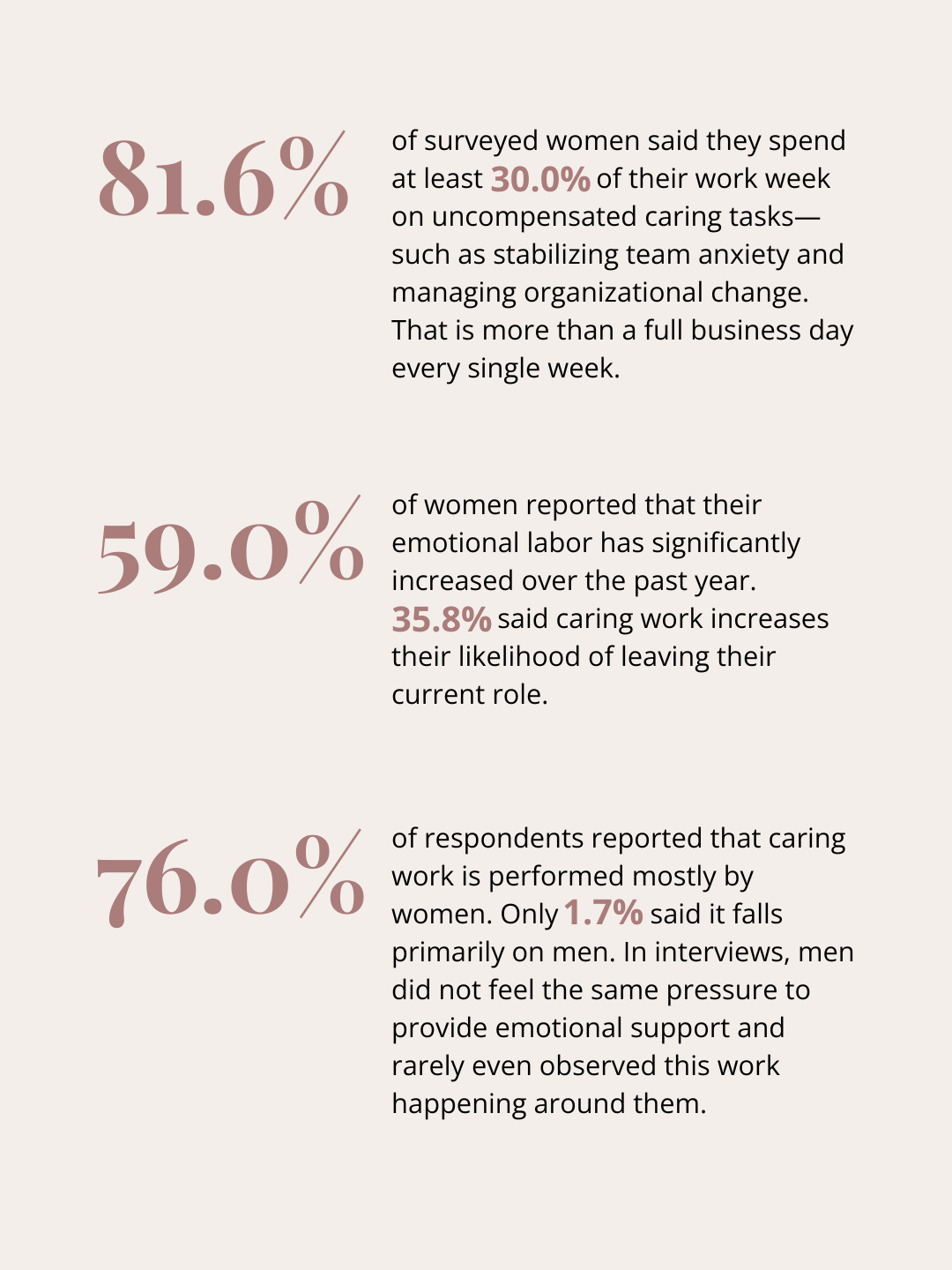
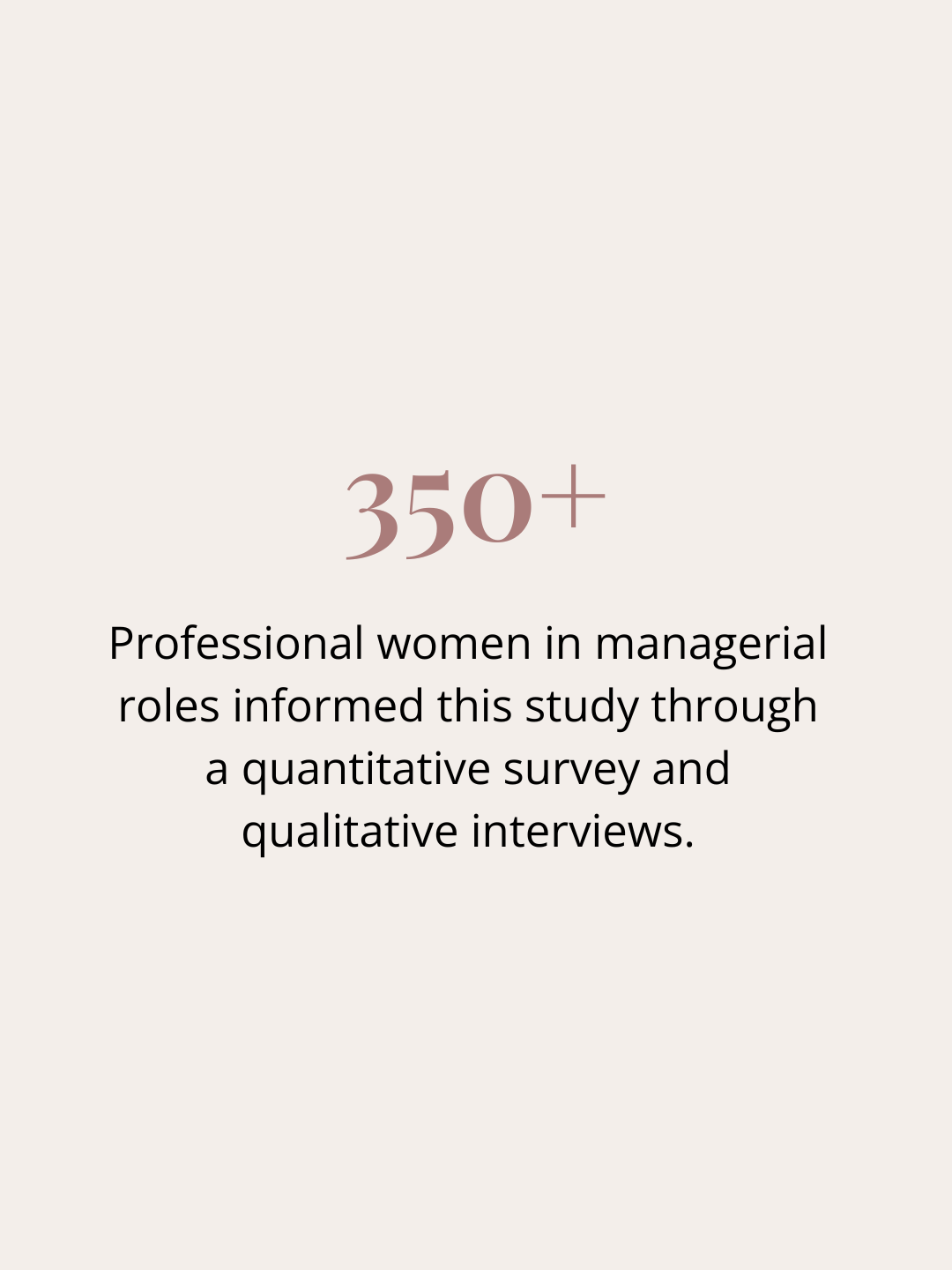
To examine this more deeply, Deepa joined forces with Colleen Ammerman of Harvard Business School. Nine months later, after surveying more than 350 women in managerial and executive roles and gathering stories from leaders across industries, the research is now live.
Their hope is that by naming the Care Tax, we can begin to shift it.
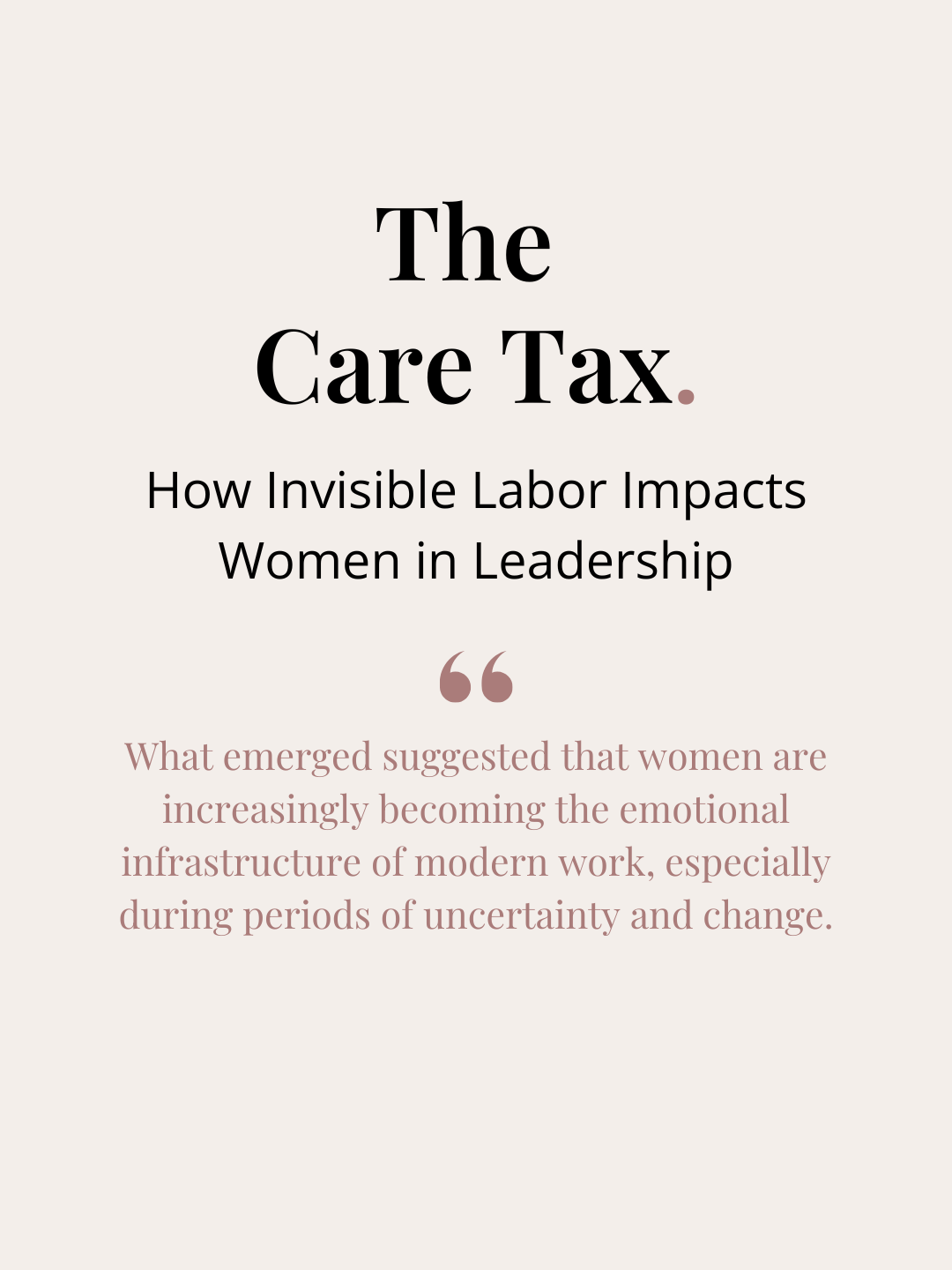
"What emerged suggested that women are increasingly becoming the emotional infrastructure of modern work, especially during periods of uncertainty and change."
Read the Full Paper.
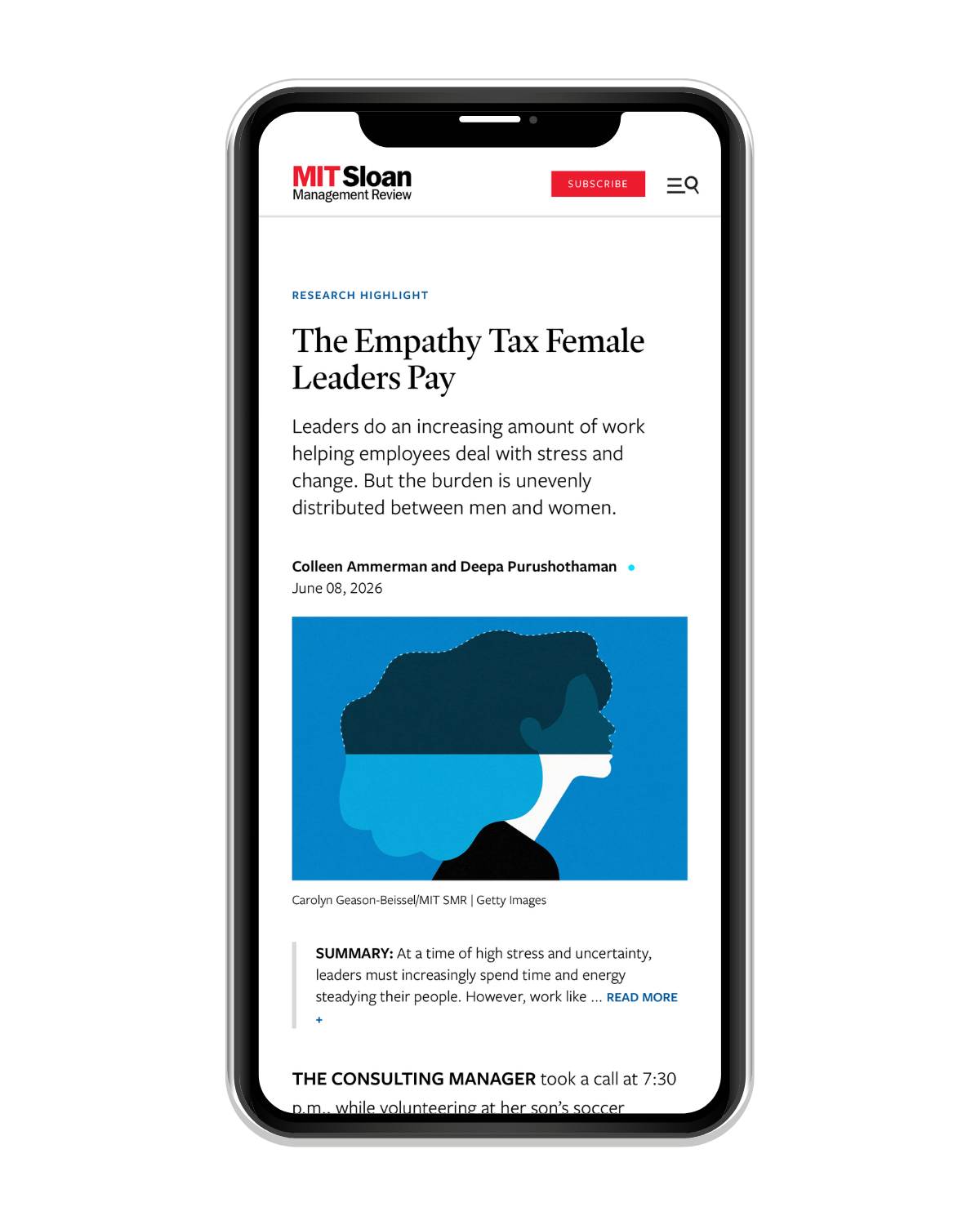
Get the full research on MIT Sloan Management Review.
Read now →
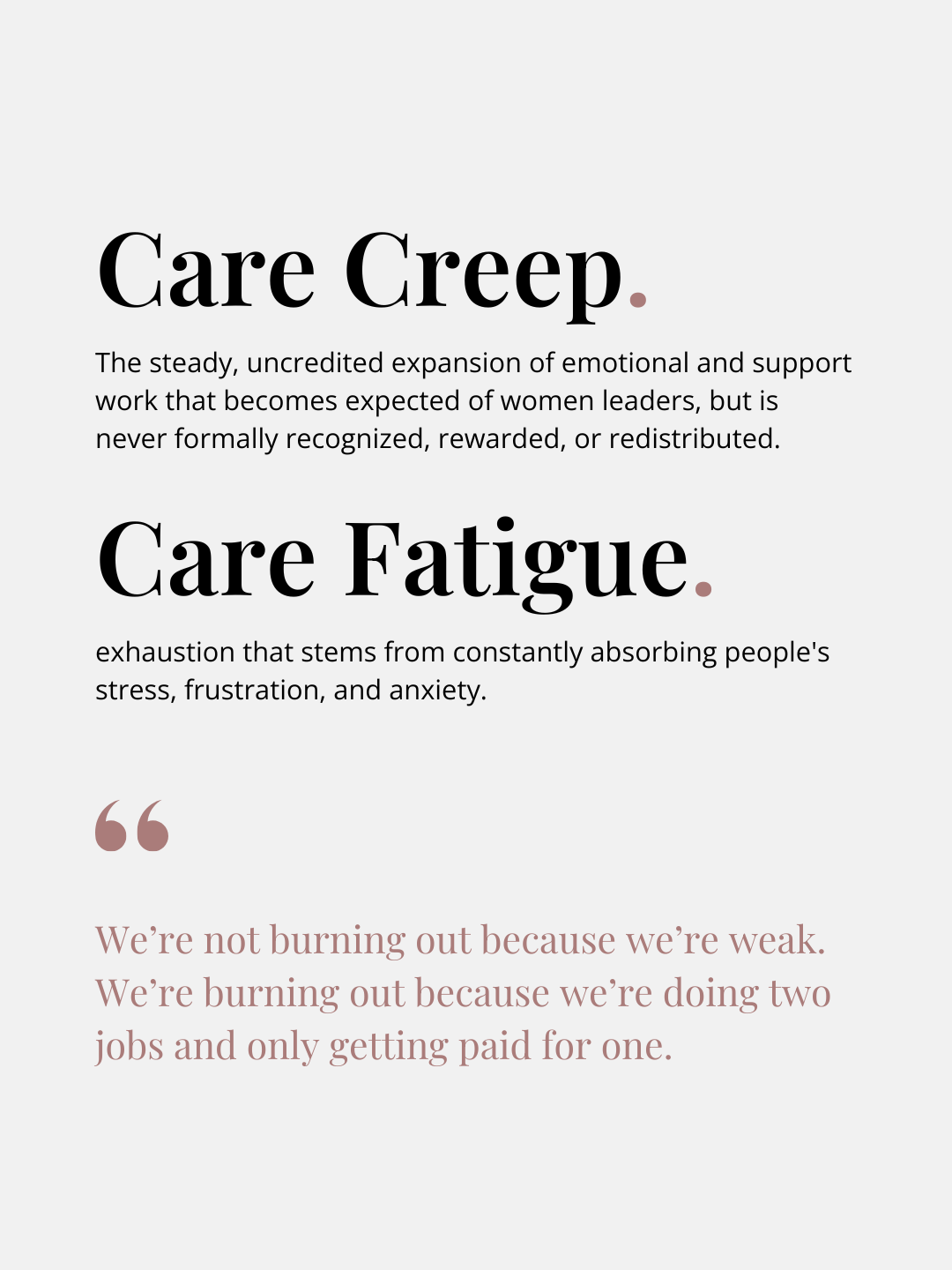
“Emotional labor rarely appears in strategy documents or performance metrics. Yet it is often the quiet infrastructure that allows organizations to function at all.”
Get the Insights.
Want more? Explore the free Care Tax resources — then bring the research to your team with a workshop, guest keynote, or executive briefing.
Understanding the
Care Tax
AI and the
Care Tax
The Care Tax
Survey
Press Coverage.
-
![]()
How The Care Tax Impacts Women Leaders—And Why Care Work Is More Important Than Ever
Forbes -
![]()
The hidden cost of empathy at work
Business Insider -
![]()
The Skill That Makes Women AI-Proof Is the Same Skill That’s Burning Them Out
The Persistent -
![]()
The 'Empathy Tax' Quietly Draining Women Leaders
Grazia -
![]()
MPW Newsletter
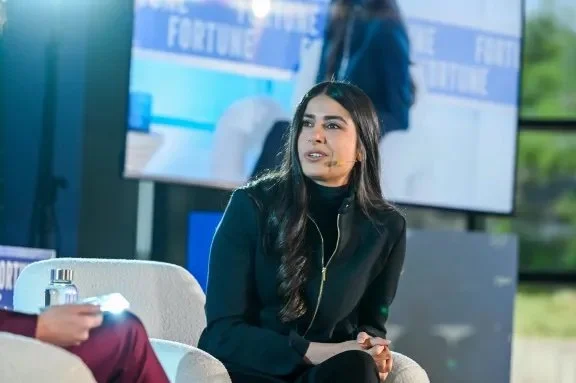
Fortune



-
![]()
The hidden cost for women of being ‘easy’ to work with
Fast Company -
![]()
Sustainable Leadership in Uncertain Times: Protecting Your Capacity, Clarity, and Wellbeing
Chief
-
![]()
New Research Finds Unrecognized Care Work Is Pushing Women Managers Toward the Exit
Women We Admire
-
![]()
The Mental Load: The Second Job Women Do at Work
Psychology Today -
![]()
The Empathy Tax Female Leaders Pay
Harvard Business Review





Let’s Unpack the Care Tax Together.
The data is out, but the conversation is just beginning.
We are hosting an exclusive, interactive roundtable discussion on how to actively name, normalize, and redistribute the Care Tax inside modern organizations.
Enter your email below to request your invitation to the live session.
What People Are Saying
About The Care Tax.
What It Looks Like
“Being the emotional infrastructure of a workplace is work. Many women aren't just managing projects and clients; they're carrying the unseen emotional weight of keeping teams connected and moving forward.”
“Emotional labor never shows up in corporate job descriptions, but it shows up everywhere in company execution. When it goes unacknowledged, organizations end up consuming the very people who make them sustainable.”
“During major corporate re-orgs, women are expected to act as the emotional stabilizers of the company. Spreadsheets get the focus, but who balances the room? It is time to formally recognize this capability.”
Why It Grows
“Midlevel managers are carrying a huge load. The more people rely on you for emotional steadiness, the more it is expected. Women are completely exhausted and are quietly walking out.”
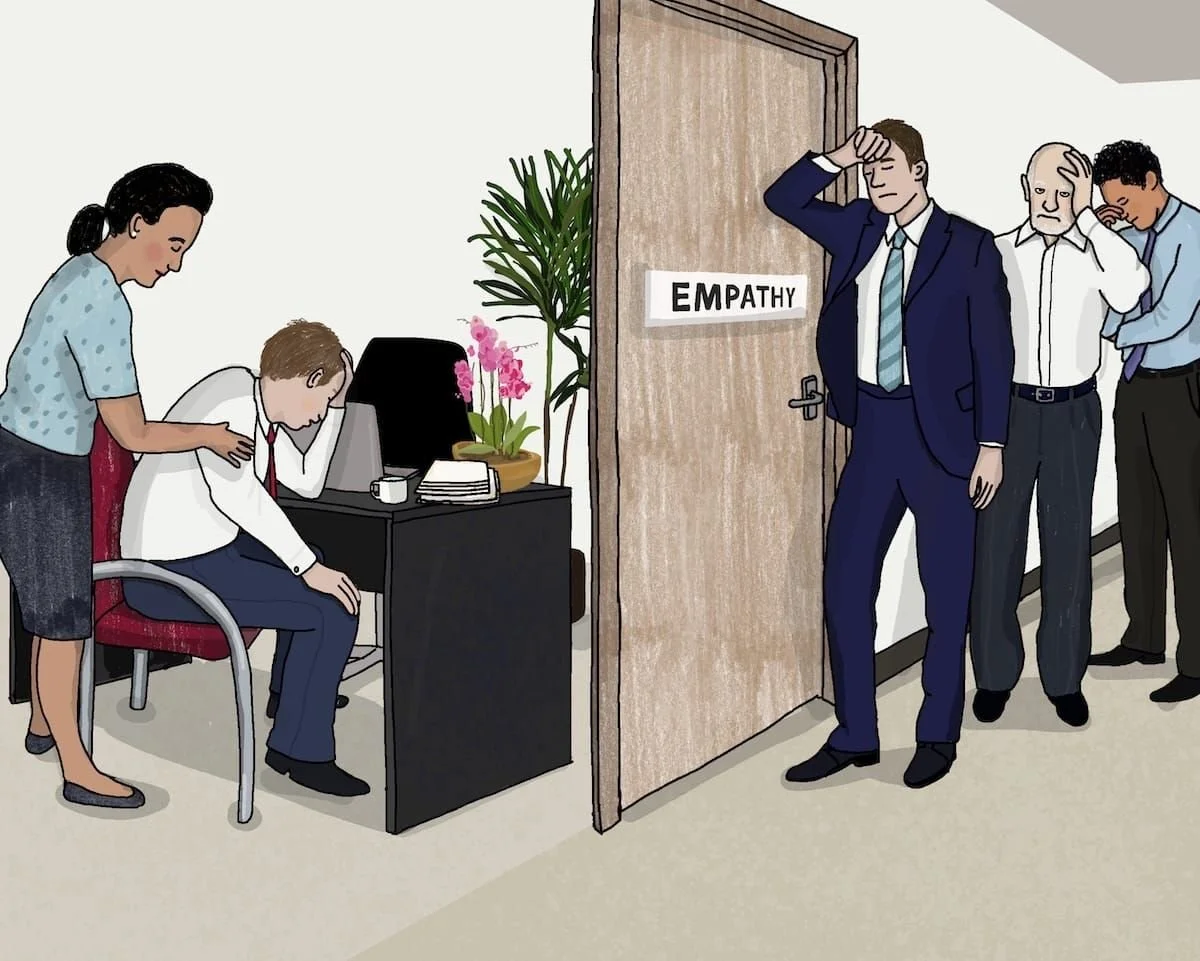
“Empathy is becoming part of the job description without becoming part of the reward system. This is not sustainable. The emotional infrastructure of modern work should not be built on women’s exhaustion.”
“This labor disappears precisely when someone becomes exceptionally good at carrying it. There’s a price tag on it after all. As someone who paid it for years and only realized when the body sent the invoice, this lands hard.”
What It Costs
“The care tax follows you home. It becomes the inner monologue of your drive, replaying conversations and carrying pieces of an institution that were never yours to carry in the first place.”
“Because there are so few women at the top, the energy tax to be the example and lift others is huge. It is a permanent baseline of a system that refuses to change, routinely resulting in burnout and sickness.”
“Your female executives are not a corporate sponge sent forth to absorb systemic anger and stress for free. Forcing women to constantly regulate rooms is a direct bottleneck to high-level strategic execution.”
The Bigger Questions
“There is no amount of corporate compensation that could ever repay Black women for the socially implicit care extracted from them. The modern balance sheet: The care tax, the Black tax, and the pink tax, plus VAT.”
“Women are still treated as the cleaning crew of corporate, promoted only to clean up what was screwed up before them, both work-wise and morale-wise. It heavily compounds the Glass Cliff.”
“In patriarchal structures, a woman setting boundaries to avoid burnout is labeled as ‘cold,’ while a man displaying empathy is penalized as ‘less strategic.’ The system is a toxic double bind.”
Bring the Care Tax discussion
to your organization.
What percentage of your leadership team's time is spent doing emotional labor that is expected but never measured?
Invite us to discuss insights from the Care Tax at your organization.